
Navigating the Twists of Modern Supply Chains
Author:prodblogtest1
Date:May 29, 2026

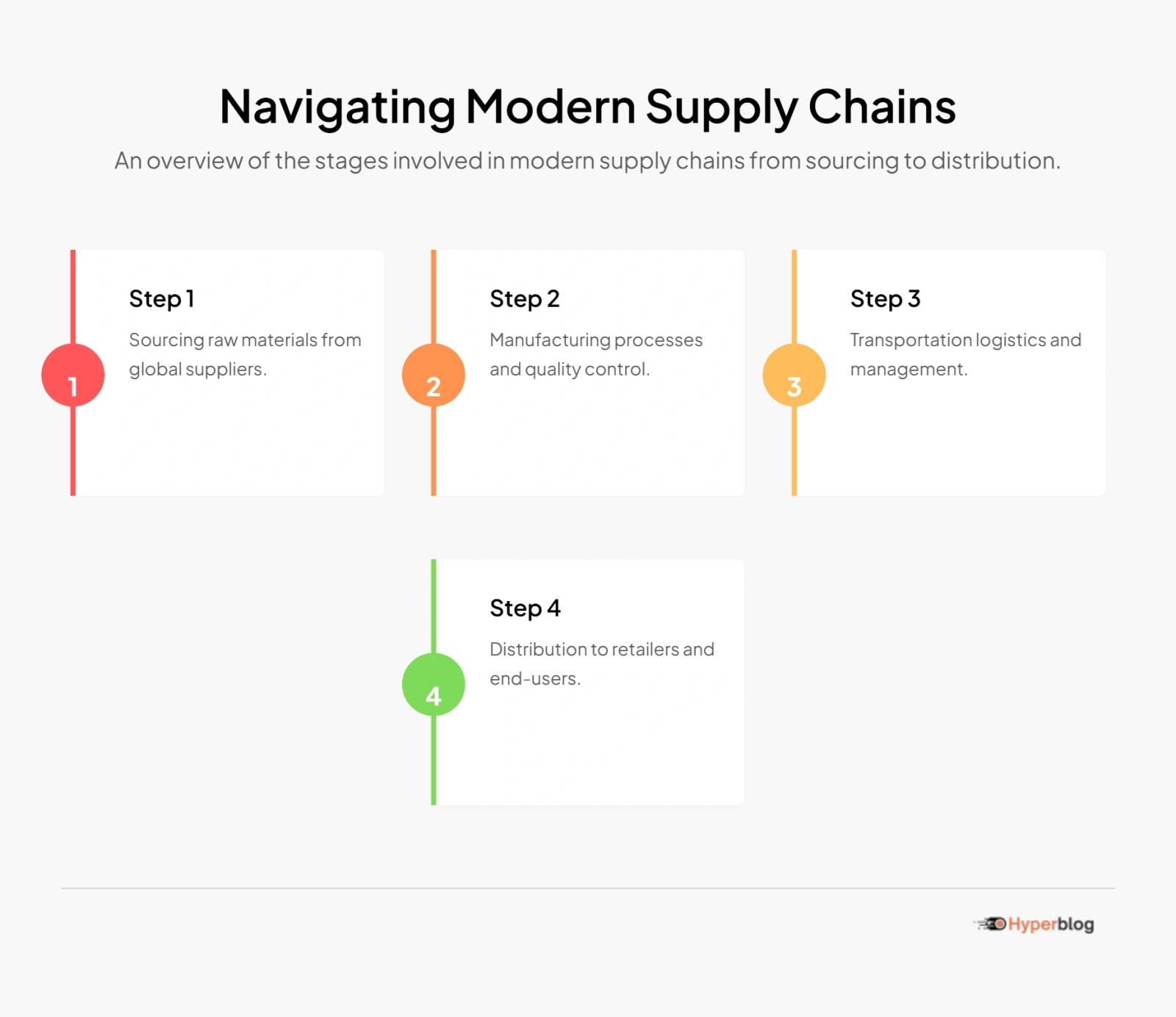
A supply chain is a complex network of entities, technologies, activities, and resources that come together to produce and deliver goods to the consumer. It typically starts with sourcing raw materials, followed by processes of manufacturing, transportation, and finally, distribution to retailers or end-users. As simple as it may sound, in reality, supply chains extend across multiple countries and continents, involving varied stakeholders and intricate logistics.
Global supply chain systems face several pressing challenges today, primarily fueled by fluctuating demand patterns, geopolitical tensions, and advances in technology. For instance, the COVID-19 pandemic brought to light deep vulnerabilities within global supply chains, causing unprecedented shipping delays and shortages. Adaptability and risk management have become pivotal strategies for businesses looking to navigate these choppy waters, ensuring sustainability and resilience in their operations.

Download our comprehensive guide to mastering modern supply chain strategies.
One significant impact on modern supply chains is technology advancement, which facilitates improved efficiency and management. Technologies like blockchain provide transparency and traceability, helping businesses monitor their supply chains in real time. Internet of Things (IoT) devices further contribute by offering precise tracking of goods during their journey, while AI and machine learning optimize inventory management and forecast demand with high accuracy.
The main components include sourcing, manufacturing, transportation, and distribution.
Technology such as AI, IoT, and blockchain has improved efficiency, transparency, and real-time monitoring.
Sustainability reduces environmental impact, cuts costs, and improves brand reputation.
IoT provides precise tracking, improves inventory management, and enhances operational efficiency.
Implementing adaptability strategies and robust risk management frameworks can help mitigate risks.
As consumers become more environmentally conscious, businesses focus on minimizing the environmental impact of their supply chains. Incorporating sustainable practices, such as reducing waste, optimizing transportation routes to reduce emissions, and engaging in ethical sourcing, has become essential. By doing so, companies not only enhance their reputations but also cater to a growing segment of consumers prioritizing sustainability.
What is the biggest challenge in supply chain management today?
Sustainability within supply chains offers multiple benefits beyond environmental impacts. Cost reduction is significant as businesses save through energy-efficient processes and wastage reductions. Moreover, sustainable practices lead to improved supplier relationships and product quality, driving competitive advantage and higher customer loyalty in the long term. As a result, sustainability is emerging as a critical factor in shaping the future of effective supply chain management.
Subscribe to Our Newsletter
Stay up to date with our latest news and updates.
Join our readers
No spam. Unsubscribe anytime.